

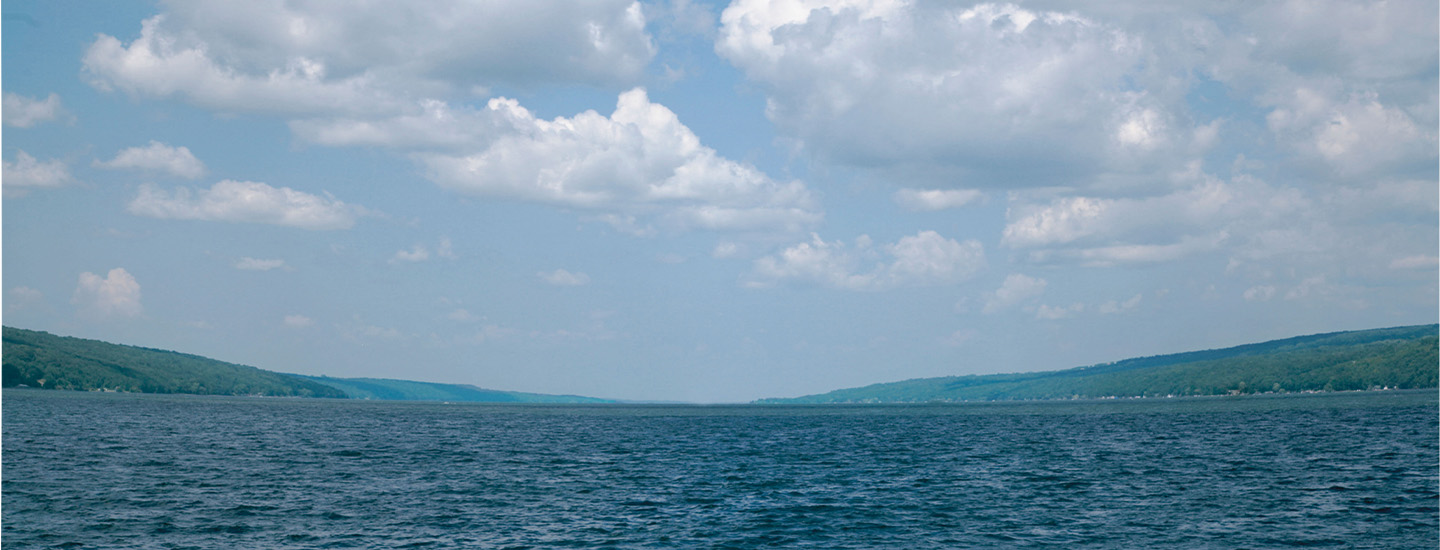

James Schwabel/Alamy Stock Photo

Standards

Is This Lake Burping?

For centuries, people living near Seneca Lake have heard loud, eerie sounds. What are they? 

Jim McMahon/Mapman ®

    Greetings from Seneca Lake! This summer, thousands of people will visit this sparkling body of water in New York’s Finger Lakes region. They’ll paddle kayaks. They’ll take scenic boat tours. They’ll walk along its beautiful 75-mile shoreline. 

    And if they’re lucky, they’ll experience a local mystery.  

    Boom!

    For centuries, people living near Seneca Lake have heard a loud, eerie sound. Some have described it as distant cannon fire. 

    Others say it sounds like thunder or a drum.

    But it’s not likely to be any of those things since it comes from the water. 

    Is something haunting this massive lake?

    Greetings from Seneca Lake! This summer, thousands of people will visit this lake in New York State. They’ll paddle kayaks. They’ll take boat tours. They’ll walk along the 75-mile shoreline.

    And they might experience a local mystery.

    Boom!

    For centuries, a loud, strange sound has been heard near Seneca Lake. Some people say it sounds like distant cannon fire. Some say it sounds like thunder or a drum.

    But it’s not any of those things. The sound comes from the water.

    Is something haunting this lake?

    Greetings from Seneca Lake! This summer, thousands of people will visit this sparkling body of water in New York’s Finger Lakes region. They’ll paddle kayaks, enjoy scenic boat tours, and walk along the lake’s beautiful 75-mile shoreline.

    And if they’re lucky, they just might experience a local mystery.

    Boom!

    For centuries, people living near Seneca Lake have been hearing a loud, eerie sound. Some have described it as distant cannon fire, while others say it sounds like thunder or a drum.

    It’s unlikely to be any of those things, however, because it comes from the water.

    Is something haunting this massive lake?

Danita Delimont/Alamy Stock Photo 

Picture-Perfect
Many people visit the lake to enjoy its beautiful views.

Searching for Answers

    Folktales have long tried to explain Seneca Lake’s booming sounds. The Native Seneca people believed they came from an angry spirit. Early American storytellers said they were the drumbeat of a soldier who had died in battle. (The booms have even become known as “the Seneca Drums.”)

    But in the last 100 years, scientists have formed their own theories. One of the most interesting is this: Could the lake be . . . burping?

    Natural gas is a type of fossil fuel. It forms deep in the earth from plants and animals that died millions of years ago. This gas can build up at the bottom of very deep bodies of water, like Seneca Lake. 

    Perhaps pockets of natural gas at the lake’s bottom are trying to escape. If so, they would rise to the surface until they burst with a boom.  

    Folktales have long tried to explain Seneca Lake’s booming sounds. The Native Seneca people believed they came from an angry spirit. Early American storytellers said they were the drumbeat of a soldier who had died in battle. (The booms have even become known as “the Seneca Drums.”)

    But in the last 100 years, scientists have formed their own ideas. One of them is this: Could the lake be burping?

    Natural gas is a type of fossil fuel. It forms deep in the earth from plants and animals that died millions of years ago. This gas can build up at the bottom of very deep bodies of water, like Seneca Lake.

    Maybe pockets of natural gas at the lake’s bottom are trying to escape. If so, they would rise to the surface and burst with a boom.

    Folktales have long tried to explain Seneca Lake’s booming sounds. The Native Seneca people believed they came from an angry spirit. Early American storytellers said they were the drumbeat of a soldier who had died in battle. (The booms have even become known as “the Seneca Drums.”)

    But in the last 100 years, scientists have formed their own theories. Among the most interesting is the idea that the lake might be . . . burping.

    Natural gas, a type of fossil fuel, forms deep in the earth from plants and animals that died millions of years ago. This gas can accumulate at the bottom of very deep bodies of water, like Seneca Lake.

    If pockets of natural gas at the lake’s bottom were to escape, they would rise to the surface until they burst with a boom.

More to the Mystery

 Liam Kennedy/The New York Times/Redux 

Looking for gas  
Scientists tested lake water samples for methane. 

    It’s been hard to figure out if this is true though. These burps happen at random times and in no one place. Scientists have been unsure about where to test their theory.

    But in 2024, a team of scientists made a discovery. On one end of the lake, they found 144 craters. These large bowl-shaped holes are hundreds of feet below the surface. Some are as wide as two football fields. Could these craters be formed by giant gas bubbles?

    The scientists tested the water there for methane. It’s the main ingredient in natural gas. Last year, they finally got the results—and were left puzzled. There was no proof that natural gas was to blame for the booming sounds. 

    So what is? For now, the mystery lives on. 

    It’s been hard to figure out if this is true though. The burps don’t happen at any special time or place. Scientists have been unsure about where to look for gas.

    But in 2024, scientists made a discovery. On one end of the lake, they found 144 craters. These large bowl-shaped holes are hundreds of feet below the surface. Some are as wide as two football fields. Could these craters have been formed by huge gas bubbles?

    The scientists tested the water there for methane. It’s the main ingredient in natural gas. Last year, they got the results. They were surprised. There was no proof that natural gas was to blame for the booming sounds.

    So what is? We still don’t know. For now, the mystery lives on. 

    It’s been difficult to determine whether this theory is correct. The booms happen at random times and in no one place, so scientists have been uncertain about where to test their theory.

    But in 2024, a team of scientists discovered 144 craters on one end of the lake. These large bowl-shaped holes are hundreds of feet below the surface. Some are as wide as two football fields. Could these craters have been formed by giant gas bubbles?

    The scientists tested the water there for methane, the main ingredient in natural gas. Last year, they finally got the results—and were left puzzled. There was no proof that natural gas was responsible for the booming sounds.

    So what is? For now, the mystery lives on. 

Skills Sheets (2)
Skills Sheets (2)
Leveled Articles (2)
Text-to-Speech