

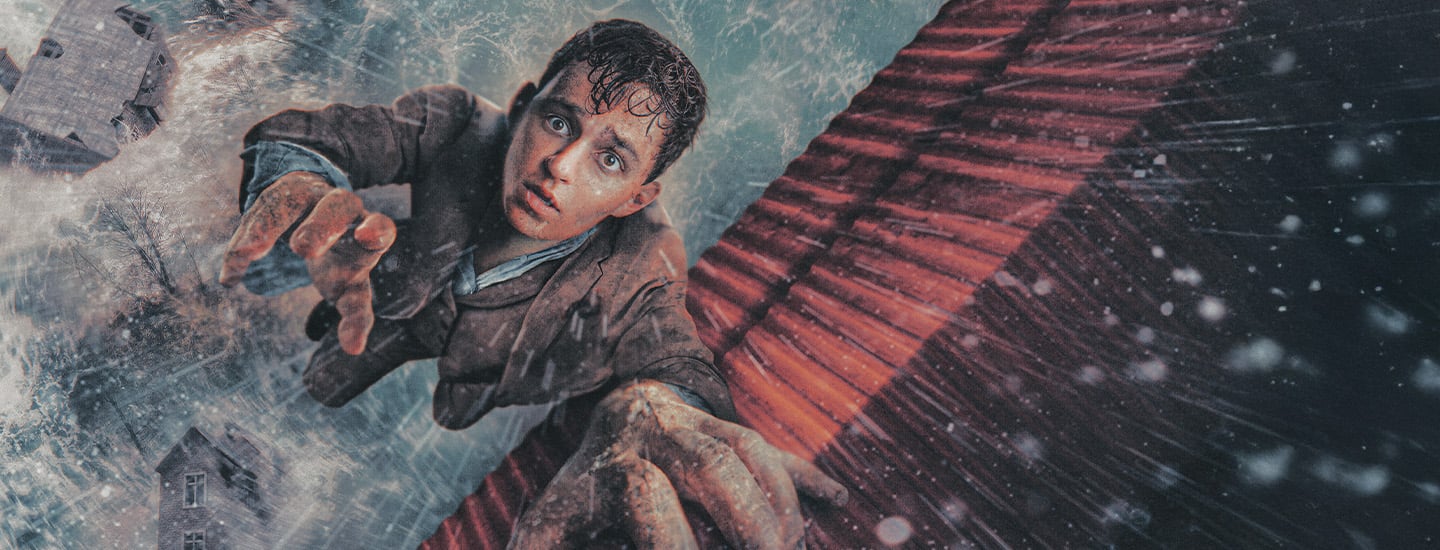

A boy clings to a steep red roof in falling snow & reaches one hand out above the houses below

Art by Randy Pollak

Standards

Wall of Water

How 16-year-old Victor Heiser survived the Great Johnstown Flood of 1889  

Before You Read: Check out our Background Builder slideshow


Jim McMahon/Mapman ® 

Conemaugh Valley, 1889
Johnstown, Pennsylvania, lies near the start of the Conemaugh River. The South Fork Dam was located upstream and to the east.

    Victor Heiser waded through 2 feet of muddy brown water. He was headed to his family’s stable. It was May 31, 1889. Heavy rain had flooded the streets of Johnstown, Pennsylvania. And the water kept rising. Victor’s dad was worried their horses would get trapped. So he sent Victor, 16, to untie them. 

    Just as Victor got the horses loose, he heard a strange noise. It was a loud roar, followed by booming crashes.  

    He looked up to see his parents in the second-story window of their house. His father motioned for him to climb onto the roof of the stable. So Victor did just that.

    What he saw when he got there was terrifying. A wall of water was coming toward him. The dark mass carried houses, train cars, trees, and animals with it.

    Within seconds, the flood crushed Victor’s house. His parents were swept away with it.

    Victor looked at his watch. It was 4:20 p.m.

    He wondered how long it would take before he was killed.

    Victor Heiser waded through muddy water. He was headed to his family’s stable. It was May 31, 1889. Rain was flooding the streets of Johnstown, Pennsylvania. Victor’s dad was worried their horses would get trapped. So he sent Victor, 16, to untie them.

    Victor heard a strange noise. It was a roar, followed by crashes.

    He saw his parents in the second-story window of their house. His father motioned for him to climb onto the roof of the stable. So Victor did.

    What he saw shocked him. A wall of water was coming toward him. The dark mass carried houses, train cars, trees, and animals.

    The flood crushed Victor’s house. It swept his parents away.

    Victor looked at his watch. It was 4:20 p.m. He wondered how much longer he would live.

    Victor Heiser waded through 2 feet of muddy brown water on the way to his family’s stable. It was May 31, 1889. Heavy rain had flooded the streets of Johnstown, Pennsylvania, and the water was still  rising. Victor’s father, worried that their horses would become trapped, had sent 16-year-old Victor to untie them.

    Just as Victor got the horses loose, he heard an unfamiliar noise: a loud roar, followed by booming crashes.

    He looked up and saw his parents in the second-story window of their house. His father gestured for him to climb onto the roof of the stable, and Victor obeyed.

    From his new vantage point, he saw something terrifying: a wall of water speeding toward him. The dark mass carried houses, train cars, trees, and animals with it.

    Within seconds, the flood demolished Victor’s house—and swept his parents away.

 Johnstown Area Heritage Association

Johnstown: Before the Flood
In the 1850s, the railroad and factories came to Johnstown. The town grew quickly. By 1889, 10,000 people lived there.

A Growing Town

 Johnstown Area Heritage Association

Workers at the Cambria Iron Company

    Victor’s father, George, had grown up in Johnstown in the 1830s and 1840s. At the time, Johnstown was a quiet village. It was located near the start of the Conemaugh River. About 3,000 people lived there.

    Then, in the early 1850s, the railroad arrived in Johnstown. It connected the town to the larger nearby city of Pittsburgh. Around that same time, the Cambria Iron Company opened. It was a factory that made iron and steel. Soon Johnstown became a busy industrial center.

    People flocked to the area to work in factories and mines. By 1889, about 10,000 people lived in Johnstown. George Heiser owned a general store in the heart of town. And business was booming.

    Victor’s dad, George, had grown up in Johnstown in the 1830s and 1840s. At the time, Johnstown was a quiet village. It was located near the start of the Conemaugh River. About 3,000 people lived there.

    Then, in the early 1850s, the railroad arrived in Johnstown. It connected the town to the nearby city of Pittsburgh. Around that same time, the Cambria Iron Company opened. This factory made iron and steel. Soon Johnstown was a busy industrial center.

    People flocked to the area. They got jobs in factories and mines. By 1889, about 10,000 people lived in Johnstown. George Heiser owned a general store in the heart of town. And business was good.

    Victor’s father, George, had grown up in Johnstown in the 1830s and 1840s. At the time, Johnstown was a quiet village of about 3,000 people, located near the start of the Conemaugh River.

    In the early 1850s, the railroad arrived in Johnstown, connecting the town to the larger nearby city of Pittsburgh. Around that same time, the Cambria Iron Company opened. It was a factory that made iron and steel. Before long, Johnstown had become a busy industrial center.

    People flocked to the area to find employment in factories and mines. By 1889, Johnstown had a population of about 10,000. George Heiser owned a general store in the heart of town, and business was booming.

Deadly Mistakes

    But there was danger waiting just 14 miles up the river. The South Fork Dam had been completed in 1852. The dam held back several streams and creeks to create the Western Reservoir. (A reservoir is a human-made lake used to store water.) 

    The reservoir was built to supply water to canals. These human-made rivers were used to transport goods on boats. But once trains replaced boats, the dam was left to slowly deteriorate. People in Johnstown were constantly worried that it would break.

    Then, in 1879, a group of rich men bought the lake, the dam, and the surrounding land. They turned it into the South Fork Fishing and Hunting Club (SFFHC). It became a private vacation resort for Pennsylvania’s richest families. They renamed the reservoir Lake Conemaugh.

    To create their perfect vacation spot, the owners of the SFFHC made changes to the dam. First, they lowered it by 3 feet. This was to make the top wide enough for two carriages to cross it.

    Next, they added a screen to the spillway. (That’s a spot where water could escape if the lake got too full.) This was to keep fish inside the lake for fishing.

    These would turn out to be deadly mistakes.

    But there was danger waiting just 14 miles up the river. The South Fork Dam had been completed in 1852. The dam held back several streams and creeks to create the Western Reservoir. (A reservoir is a human-made lake used to store water.)

    The reservoir was built to supply water to canals. These human-made rivers were used to transport goods on boats. But once trains replaced boats, the dam was left to deteriorate. People in Johnstown worried that it would break.

    Then, in 1879, a group of rich men bought the lake, the dam, and the surrounding land. They turned it into the South Fork Fishing and Hunting Club (SFFHC). It became a private vacation spot for rich families. They renamed the reservoir Lake Conemaugh.

    To create their vacation spot, the owners of the SFFHC made changes to the dam. First, they lowered it by 3 feet. This was to make the top wide enough for two carriages to cross it.

    Next, they added a screen to the spillway. (That’s a spot where water could escape if the lake got too full.) This was to keep fish inside the lake for fishing.

    These would prove to be deadly mistakes.

    But there was danger waiting just 14 miles up the river. The South Fork Dam, which had been completed in 1852, held back several streams and creeks to create the Western Reservoir. (A reservoir is a human-made lake used to store water.)

    The reservoir was built to supply water to canals—human-made rivers that were used to transport goods on boats. But after trains replaced boats, the dam was neglected and allowed to slowly deteriorate. People in Johnstown were constantly worried that it would break.

    Then, in 1879, a group of wealthy men purchased the lake, the dam, and the surrounding land and turned it into the South Fork Fishing and Hunting Club (SFFHC). It became a private vacation resort for Pennsylvania’s richest families. They renamed the reservoir Lake Conemaugh.

    To create their perfect vacation spot, the owners of the SFFHC made alterations to the dam. First, they lowered it by 3 feet in order to make the top wide enough for two carriages to cross it.

    Next, in order to keep fish inside the lake for fishing, they added a screen to the spillway. (That’s a spot where water could escape if the lake became too full.)

    These changes would later prove to have devastating consequences.

Rising Waters

    Fast-forward to May 1889. In the last few days of the month, about 6 to 10 inches of rain fell in the Johnstown area. By the morning of May 31, the rivers were about to overflow.

    All morning, people came in and out of George Heiser’s store. They bought supplies. They wondered: Would this be the day the old dam finally broke?

    Up at SFFHC, Lake Conemaugh was rising about an inch every 10 minutes. Workers tried everything to prevent disaster. They piled more dirt on top of the dam. They tried to unclog the spillway. They even tried to dig a new spillway.

    But by 1:30 p.m., there was nothing more they could do. The water started to pour over the top of the dam. A crowd soon gathered, waiting for disaster. 

    Then, a few minutes after 3 p.m., it happened.

    Swoooooosh!

    The dam burst, sending almost 4 billion gallons of water toward Johnstown. Along the way, the flood picked up houses, trains, and trees. It reached Johnstown about an hour after the dam burst. By that time, the rolling mass of water and debris was 40 feet tall.

    That’s what Victor saw coming toward him as he stood on the roof of the stable.

    Fast-forward to 1889. In the last few days of May, about 6 to 10 inches of rain fell in the Johnstown area. By the morning of May 31, the rivers were about to overflow.

    People came into George Heiser’s store. They bought supplies. They wondered: Would this be the day the dam broke?

    At SFFHC, Lake Conemaugh was rising fast. Workers tried to keep the dam from breaking. They piled more dirt on top of the dam. They tried to unclog the spillway. They even tried to dig a new spillway.

    By 1:30 p.m., they had done all they could. The water started to pour over the top of the dam. A crowd gathered to watch.

    Then, just after 3 p.m., it happened.

    Swoooooosh!

    The dam burst, sending almost 4 billion gallons of water toward Johnstown. Along the way, the flood picked up houses, trains, and trees. It reached Johnstown about an hour after the dam burst. By that time, the mass of water and debris was 40 feet tall.

    That’s what Victor saw coming toward him as he stood on the roof of the stable.

    Fast-forward to May 1889. In the last few days of the month, about 6 to 10 inches of rain fell in the Johnstown area. By the morning of May 31, the rivers were on the verge of overflowing.

    All morning, people were coming into George Heiser’s store to buy supplies. They wondered: Would this be the day the old dam finally broke?

    Up at SFFHC, Lake Conemaugh was rising rapidly: about an inch every 10 minutes. Workers tried everything to prevent disaster. They piled more dirt on top of the dam. They tried to unclog the spillway. They even attempted to dig a new spillway.

    But by 1:30 p.m., it became evident that there was nothing more to be done. The water started to pour over the top of the dam. A crowd soon gathered, anticipating a disaster.

    Then, a few minutes after 3 p.m., it happened.

    Swoooooosh!

    The dam burst, sending almost 4 billion gallons of water barreling toward Johnstown. Along the way, the flood picked up houses, trains, and trees. By the time it reached Johnstown, about an hour after the dam burst, the rolling mass of water and debris was 40 feet tall.

    That’s what Victor saw coming toward him as he stood on the roof of the stable.

 Johnstown Area Heritage Association

A Fancy Club  
The South Fork Fishing and Hunting Club was formed in 1879. It became a popular vacation spot for some of the country’s richest families.

Riding Out the Flood 

    Soon the stable Victor stood on was ripped out of the ground. Somehow, he was able to stay on top as it was swept away. Victor saw his neighbors in danger all around him. “There was nothing I could do for anybody,” Victor later remembered.

    Finally, the flood seemed to slow. Victor spotted a building that was still standing. He jumped onto its roof. A small group of people had done the same. Maybe I won’t die after all, he thought.

    He took out his watch again. It was not yet 4:30 p.m. Ten minutes was all it took to destroy his town.

    The cold rain kept falling. As night fell, Victor and the others on the roof climbed into the building’s attic. There they spent a long, sleepless night. 

    They could hear the whooshing sound of buildings falling one by one into the water.

    All they could hope for was that their building wasn’t next.

    Soon the stable Victor stood on was ripped out of the ground. Somehow, he stayed on top as it was swept away. He saw neighbors all around him. They were in danger. “There was nothing I could do for anybody,” he later remembered.

    The flood seemed to slow. Victor saw a building that was still standing. He jumped onto its roof. A few others had done the same. Maybe I won’t die after all, he thought.

    He took out his watch again. It was not yet 4:30 p.m. Ten minutes was all it took to destroy his town.

    The rain kept falling. Victor climbed into the building’s attic. The others on the roof did too. They spent the night there.

    They could hear buildings falling one by one into the water.

    They hoped their building wasn’t next.

    Soon the stable Victor stood on was ripped out of the ground. Somehow, he managed to remain on top as it was swept away. Victor saw his neighbors in peril all around him. “There was nothing I could do for anybody,” Victor later recalled.

    Finally, the flood seemed to slow. Victor spotted a building that was still standing, and he jumped onto its roof. A small group of other people had done the same. Maybe I won’t die after all, he thought.

    He took out his watch again and saw that it was not yet 4:30 p.m. Ten minutes was all it had taken to destroy his town.

    The cold rain kept coming down. As night fell, Victor and the others on the roof climbed into the building’s attic. There they spent a long, sleepless night.

    They could hear the whooshing sound of buildings falling one by one into the water.

    All they could hope for was that their building wouldn’t be next.


Why Did the Dam Break?

Experts found that the SFFHC caused the dam to fail. Here’s why.

NPS/Harpers Ferry Center

1. Leaks in the dam were not repaired.

2. The spillway was covered with a fish screen and bridge.

3. Pipes to help control the water level were not put in.

4. The dam was lowered to create a wider road.

1. Leaks in the dam were not repaired.

2. The spillway was covered with a fish screen and bridge.

3. Pipes to help control the water level were not put in.

4. The dam was lowered to create a wider road.

1. Leaks in the dam were not repaired.

2. The spillway was covered with a fish screen and bridge.

3. Pipes to help control the water level were not put in.

4. The dam was lowered to create a wider road.

Still Not Over

    By the time the sun came up, the rain had stopped. The water level had gone down a bit. Victor was able to leave the building. He walked on debris until he reached solid ground. 

    But the nightmare wasn’t over. 

    Crushed houses, train cars, and other debris had gotten caught against Johnstown’s Stone Bridge. Then the whole mess caught on fire—and burned for three days. In all, the fire and flood killed 2,209 people. 

    The story of the flood spread across the country. Newspapers reported on the disaster for weeks. Donations rolled in from around the world. People didn’t just send money. They sent food, clothes, furniture, soap, and more. 

    By sunrise, the rain had stopped. The water level had gone down a bit. Victor was able to leave the building. But the nightmare wasn’t over.

    Crushed houses, train cars, and other debris had gotten caught against Johnstown’s Stone Bridge. The whole mess caught on fire. It burned for three days.

    In all, the fire and flood killed 2,209 people.

    The story of the flood spread. People  around the world heard about it. They wanted to help. They sent money. They sent food, clothes, and soap too.

    By sunrise, the rain had stopped. The water level had gone down somewhat, and Victor was able to leave the building. He walked on debris until he reached solid ground.

    But the nightmare wasn’t over.

    Crushed houses, train cars, and other debris had gotten trapped against Johnstown’s Stone Bridge. Then the whole mess caught on fire—and burned for three days. In all, the fire and flood killed 2,209 people.

    The story of the flood spread across the United States. Newspapers reported on the disaster for weeks, and donations rolled in from around the world. In addition to donating money, people sent food, clothing, furniture, soap, and more.

Science History Images/Alamy Stock Photo (Bridge); AP Images (After Flood)

Johnstown: After the Flood
Huge piles of debris were left behind. The disaster killed 2,209 people, including 99 entire families.

Anger and Blame

    After the flood, anger started to brew in Johnstown. Why? Many people blamed the men of the SFFHC for the flood. These rich men had made the dam weaker—just so they could enjoy summers of fishing and boating. 

    Experts later came to look at the dam. They found that the changes the club made to the dam had caused it to break. So people who lost loved ones in the flood took the club to court. 

    But the men of the SFFHC were some of the richest, most powerful men in the world. In the end, nobody who took the SFFHC to court won. All the people of Johnstown could do was rebuild and try to move on. 

    And rebuild they did. Most flood survivors stayed in the valley. By 1910, more than 50,000 people lived in the Johnstown area.

    After the flood, anger brewed in Johnstown. Why? Many people blamed the men of the SFFHC for the flood. These men had made the dam weaker, just so they could have fun fishing and boating.

    Experts looked at the dam. They found that the changes the club made had caused the dam to break. So people who lost loved ones in the flood took the club to court.

    But the club owners were rich and powerful. No one who took the club to court won. All the people of Johnstown could do was rebuild and try to move on.

    And so they did. Most flood survivors stayed in the valley. By 1910, more than 50,000 people lived in the Johnstown area.

    After the flood, anger started to brew in Johnstown. Why? Many people blamed the owners of the SFFHC for the disaster. These wealthy men had made the dam weaker—just so they could enjoy summers of fishing and boating.

    Experts later inspected the dam and determined that the changes made by the club had indeed caused it to break. So people who had lost loved ones in the flood took the club to court.

    But the men of the SFFHC were among the richest, most influential men in the world. Ultimately, none of the lawsuits against the SFFHC was successful. All the people of Johnstown could do was rebuild and try to move on.

    And rebuild they did. Most of the flood survivors decided to remain in the valley. By 1910, more than 50,000 people were living in the Johnstown area.

An Amazing Life

Heritage Art/Heritage Images via Getty Images (Victor Heiser); W. W. Norton & Company (An American Doctor’s Odyssey)

Victor Heiser became a famous doctor. 

    For two weeks after the flood, Victor searched for his parents. Sadly, they hadn’t survived. At 16, Victor was alone in the world.

    He stayed with a friend’s family for a while. Later he went to medical school. After becoming a doctor, he made it his mission to fight diseases in countries around the world. He’s said to have saved as many as 2 million lives through his work in places like the Philippines, Ethiopia, and Japan.

    It’s a fitting ending to Victor’s story. As a young boy, he lost everything. He couldn’t save his parents—or many of his neighbors.

    So he devoted himself to saving the lives of strangers worldwide. 

    For two weeks after the flood, Victor looked for his parents. Sadly, they hadn’t survived. At 16, Victor was alone in the world.

    He stayed with a friend’s family for a while. Later he went to medical school.

    As a doctor, he worked to fight diseases in countries around the world. He’s said to have saved as many as 2 million lives through his work in places like the Philippines, Ethiopia, and Japan.

    It’s a fitting ending to Victor’s story. As a boy, he lost everything. He couldn’t save his parents. He couldn’t save many of his neighbors. But he found a way to help people. He saved the lives of strangers worldwide. 

    For two weeks after the flood, Victor searched for his parents. Sadly, they hadn’t survived. At only 16 years old, Victor Heiser was alone in the world.

    He stayed with a friend’s family for a while. Later he attended medical school, became a doctor, and made it his mission to fight diseases in countries around the world. Victor is said to have saved as many as 2 million lives through his work in places like the Philippines, Ethiopia, and Japan.

    It’s a fitting ending to Victor’s story. As a teenager, he lost everything. He wasn’t able to rescue his parents—or many of his neighbors.

    So he devoted himself to saving the lives of strangers worldwide. 

Background Builder

Skills Sheets (5)
Skills Sheets (5)
Skills Sheets (5)
Skills Sheets (5)
Skills Sheets (5)
Lesson Plan (1)
Leveled Articles (2)
Text-to-Speech