

Star of the show
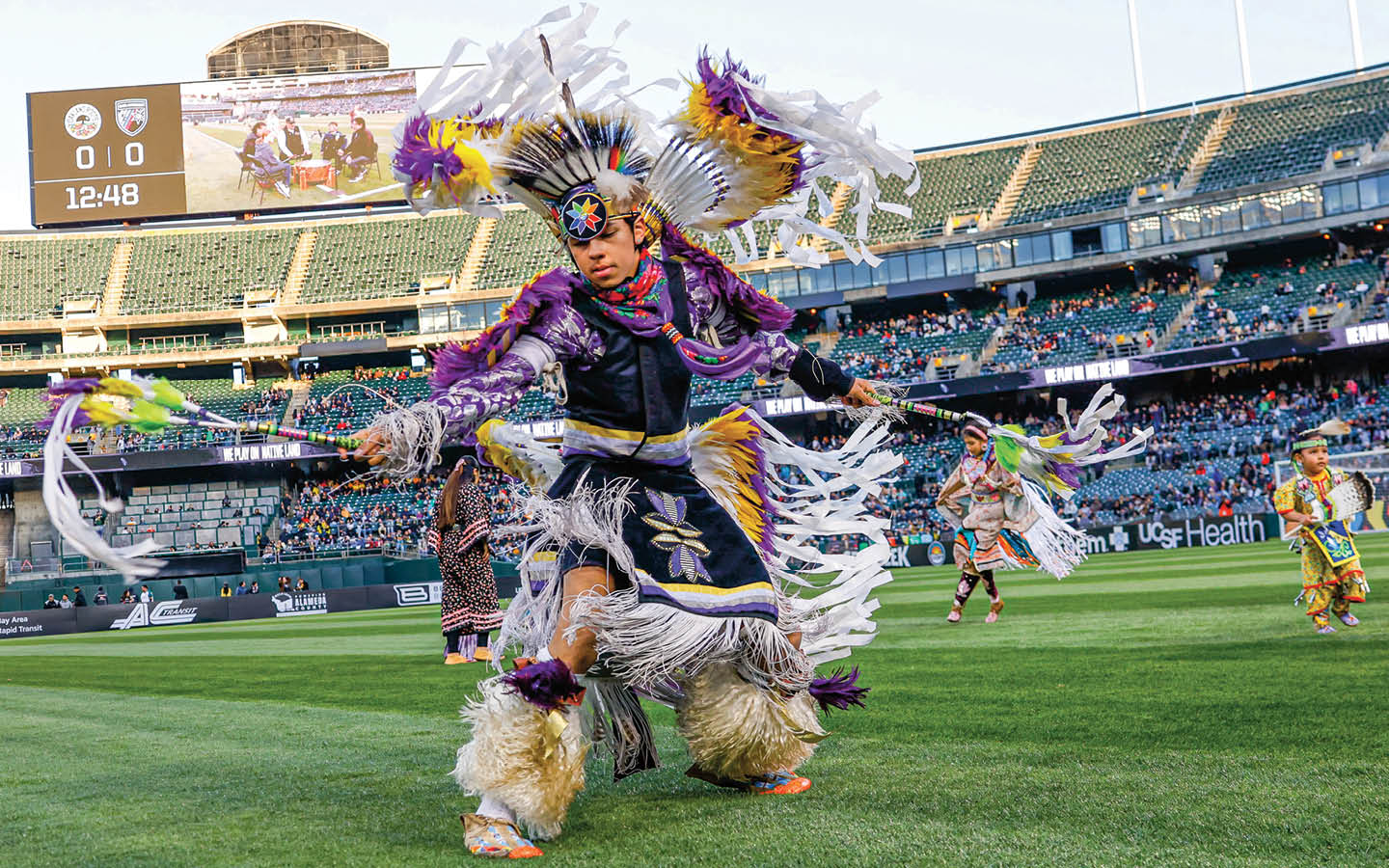
Tank got to dance at the opening game for the Oakland Roots soccer team.

Oakland Roots and Soul Sports Club

CCSS

R.1, R.2, R.3, R.4, R.6, R.7, W.2, SL.1, L.4, L.6

Standards

Born to Dance

Tank, 15, has been dancing at powwows since he was a kid. Here’s what this tradition means to him—and his culture.  

Shutterstock.com

Fry bread is fried dough that can be sweet or salty. Many tribes have their own recipes.

    There’s no better place to be than a powwow. As I walk in, the smells of fry bread, hot dogs, and strawberry shortcake fill the air. I can hear a steady drum, like a heartbeat bringing everyone together. 

    Excitement fills me up. I can’t wait to catch up with my friends and eat my favorite foods. 

    But more than anything, I can’t wait to dance.

    I love going to a powwow. As I walk in, the smells of fry bread, hot dogs, and strawberry shortcake fill the air. I can hear a steady drum, like a heartbeat bringing everyone together.

    Excitement fills me up. I can’t wait to catch up with my friends and eat my favorite foods.

    And I can’t wait to dance.

    There’s no better place to be than a powwow. As I walk in, the aromas of fry bread, hot dogs, and strawberry shortcake fill the air. I can hear a steady drum, like a heartbeat bringing everyone together.

    Excitement fills me up. I can hardly wait to catch up with my friends and enjoy my favorite foods.

    But more than anything, I can hardly wait to dance.

The Powwow

Courtesy of Family

He also plays basketball!

    You might be wondering what a powwow is. It’s a gathering where Native American people connect with each other and celebrate our cultures. We eat traditional foods, sing songs, and tell stories. There are many powwows held all around the country. Some are big, with hundreds of people. Others are smaller.

    Most powwows are intertribal. That means that people from different tribes or nations attend. My tribes are Cherokee, Choctaw, Apache (uh-PA-chee), and Taos Pueblo (tows PWEH-blow). But you don’t have to be Native American to come to a powwow. Anyone is welcome as long as they’re respectful. In fact, a powwow is a great place to learn about Native American culture. 

    Today it seems like many people don’t know that Native Americans still exist. And if they do, they might imagine stereotypes. The truth is, we are still here, and we are proud of our traditions. And we’re not all the same. There are hundreds of different tribes, each with their own unique cultures and languages. A powwow is about sharing those cultures.

    You might be wondering what a powwow is. It’s a gathering where Native American people connect with each other and celebrate our cultures. We eat traditional foods, sing songs, and tell stories. There are many powwows held all around the country. Some have hundreds of people. Others are smaller.

    Most powwows are intertribal. That means people from different tribes or nations attend. My tribes are Cherokee, Choctaw, Apache (uh-PA-chee), and Taos Pueblo (tows PWEH-blow). But you don’t have to be Native American to come to a powwow. Anyone is welcome as long as they’re respectful. A powwow is a great place to learn about Native American culture.

    Today it seems like many people don’t know that Native Americans still exist. And if they do, they might imagine stereotypes. But we’re still here. We’re proud of our traditions. And we’re not all the same. There are hundreds of tribes. Each has its own culture and language. A powwow is about sharing those culture

    You might be wondering what a powwow is. It’s a gathering where Native American people connect with each other and celebrate our cultures. We eat traditional foods, sing songs, and tell stories. There are many powwows held all around the country. Some are large, with hundreds of people. Others are smaller.

    Most powwows are intertribal, which means they’re attended by people from different tribes or nations. My tribes are Cherokee, Choctaw, Apache (uh-PA-chee), and Taos Pueblo (tows PWEH-blow). But you don’t have to be Native American to come to a powwow. Anyone is welcome as long as they’re respectful—and a powwow is an excellent place to learn about Native American culture.

    These days, it seems like many people are unaware that Native Americans still exist—and if they are aware, there’s a good chance they’re picturing stereotypes. The truth is, we are still here, and we are proud of our traditions. And we’re not all the same. There are hundreds of different tribes, each with their own unique cultures and languages. A powwow is about sharing those cultures.

Dancer for Life

    Dancing is a big part of the powwow. There are many different kinds of dances. Each one is done to a different drumbeat. Each one also has its own special regalia, or outfits. There are celebration dances, healing dances, war dances, and more. I do fancy dancing, which is a fast-paced celebration dance.

    I’ve always been drawn to the dance circle. When I was a baby, my mom carried me while she danced. My sisters dance too. As soon as I could walk, I started dancing myself. I learned a lot about dancing at powwows and from my family members. I also practice at a space called the Intertribal Friendship House every week. 

    An important part of dancing is the regalia we wear. Like the dancing itself, my regalia has come from many members of my community and family. My uncle gave me one of my outfits. My grandma helped me put together another one. My sisters made beadwork pieces. My uncle gave me eagle feathers.

    Every time I put on my regalia, my mood lifts. I know I’ll be dancing soon.

    Dancing is a big part of the powwow. There are many kinds of dances. Each one is done to a different drumbeat. Each one has its own special regalia, or outfits. There are healing dances, war dances, and more. I do fancy dancing, a type of celebration dance.

    I’ve always been drawn to the dance circle. When I was a baby, my mom carried me while she danced. My sisters dance too. As soon as I could walk, I started dancing. I learned about dancing at powwows and from my family. I also practice at a space called the Intertribal Friendship House every week.

    An important part of dancing is the regalia we wear. My regalia has come from my community and family. My uncle gave me an outfit. My grandma helped me put together another. My sisters made beadwork pieces. My uncle gave me eagle feathers.

    When I put on my regalia, my mood lifts. I know I’ll be dancing soon.

    Dancing is a major component of the powwow. There are many different kinds of dances. Each one is done to a different drumbeat. Each one also has its own special regalia, or outfits. There are celebration dances, healing dances, war dances, and more. I do fancy dancing, which is a fast-paced celebration dance.

    I’ve always been drawn to the dance circle. When I was a baby, my mother carried me while she danced. My sisters dance too. As soon as I could walk, I started dancing myself. I learned a lot about dancing at powwows from my family members. I also practice at a space called the Intertribal Friendship House every week.

    An important part of dancing is the regalia we wear. Like the dancing itself, my regalia has come from many members of my community and family. My uncle gave me one of my outfits, and my grandmother helped me put together another one. My sisters made beadwork pieces. My uncle gave me eagle feathers.

    Every time I put on my regalia, my mood lifts. I know I’ll be dancing soon.

Courtesy of Family

1. Tank poses with his mentor, Christian Parrish.

2. Tank has been dancing since he was a little kid.

Why I Dance

Courtesy of Family

Creating his regalia  
What’s Tank holding? Eagle feathers! He used them to make a piece of his regalia.

    What’s it like to dance at a powwow? It all starts with the drums. As soon as they start beating, my feet are moving. All I see is a blur of color and feathers as I turn and duck, drop and spin. The drums get faster and faster, and so do I. 

    Then, all of a sudden, the beat stops. I freeze. The sound of the cheering crowd replaces the sound of the drums. I look around at my friends and family, and I can’t help but smile. I love making them proud. 

    Dancing is fun. I love to compete with my friends, and of course it feels great to win. But I don’t dance for the prizes. I dance for the people who can’t. Some people can’t afford the regalia. Others might have physical disabilities.

    And there are the elders who can no longer dance. I dance for all of them.

    What’s it like to dance at a powwow? It starts with the drums. Once they start beating, my feet are moving. I turn and duck, drop and spin. The drums get faster, and so do I.

    Then the beat stops. I freeze. The crowd cheers. I look around at my friends and family. I love making them proud.

    Dancing is fun. I love to compete, and it feels great to win. But I don’t dance for the prizes. I dance for the people who can’t. Some people can’t afford the regalia. Others might have physical disabilities.

    And there are the elders who can no longer dance. I dance for all of them. •

    What’s it like to dance at a powwow? It all starts with the drums. As soon as they start beating, my feet are moving. All I see is a blur of color and feathers as I turn and duck, drop and spin. The drums get faster and faster, and so do I.

    Then the beat suddenly stops, and I freeze. The sound of the cheering crowd replaces the sound of the drums. I look around at my friends and family, and I can’t help but smile. I love making them proud.

    Dancing is fun. I love to compete with my friends, and of course it feels awesome to win. But I don’t dance for the prizes. I dance for the people who can’t. Some people can’t afford the regalia. Others might have physical disabilities.

    And then there are the elders who can no longer dance.

    I dance for all of them. 

ACTIVITY: 
Cause and Effect

You’ve just read “Born to Dance.” Now it’s time to do this activity.

You’ve just read “Born to Dance.” Now it’s time to do this activity.

You’ve just read “Born to Dance.” Now it’s time to do this activity.

Tip: A cause is what makes something happen. An effect is what happens as a result.

Tip: A cause is what makes something happen. An effect is what happens as a result.

Tip: A cause is what makes something happen. An effect is what happens as a result.

What to do: Fill in the missing causes and effects below by writing your answers on a separate sheet of paper.

What to do: Fill in the missing causes and effects below by writing your answers on a separate sheet of paper.

What to do: Fill in the missing causes and effects below by writing your answers on a separate sheet of paper.

Cause: Why did something happen?

Effect: What happened?

Cause: Why did something happen?

Effect: What happened?

Cause: Why did something happen?

Effect: What happened?

Cause: Dancing is important to Tank’s family and has always been part of his life. 

Effect:

Hint: When did Tank start dancing?

Cause: Dancing is important to Tank’s family and has always been part of his life. 

Effect:

Hint: When did Tank start dancing?

Cause: Dancing is important to Tank’s family and has always been part of his life. 

Effect:

Hint: When did Tank start dancing?

Cause:

Hint: Where did Tank’s regalia come from?

Effect: Tank’s regalia is special to him. 

Cause:

Hint: Where did Tank’s regalia come from?

Effect: Tank’s regalia is special to him. 

Cause:

Hint: Where did Tank’s regalia come from?

Effect: Tank’s regalia is special to him. 

Cause: When he finishes dancing, Tank looks around at his friends and family.

Effect

Hint:  How does Tank feel when he sees his friends and family watching him?

Cause: When he finishes dancing, Tank looks around at his friends and family.

Effect

Hint:  How does Tank feel when he sees his friends and family watching him?

Cause: When he finishes dancing, Tank looks around at his friends and family.

Effect

Hint:  How does Tank feel when he sees his friends and family watching him?

videos (1)
Skills Sheets (8)
Skills Sheets (8)
Skills Sheets (8)
Skills Sheets (8)
Skills Sheets (8)
Skills Sheets (8)
Skills Sheets (8)
Skills Sheets (8)
Lesson Plan (1)
Leveled Articles (2)
Text-to-Speech