

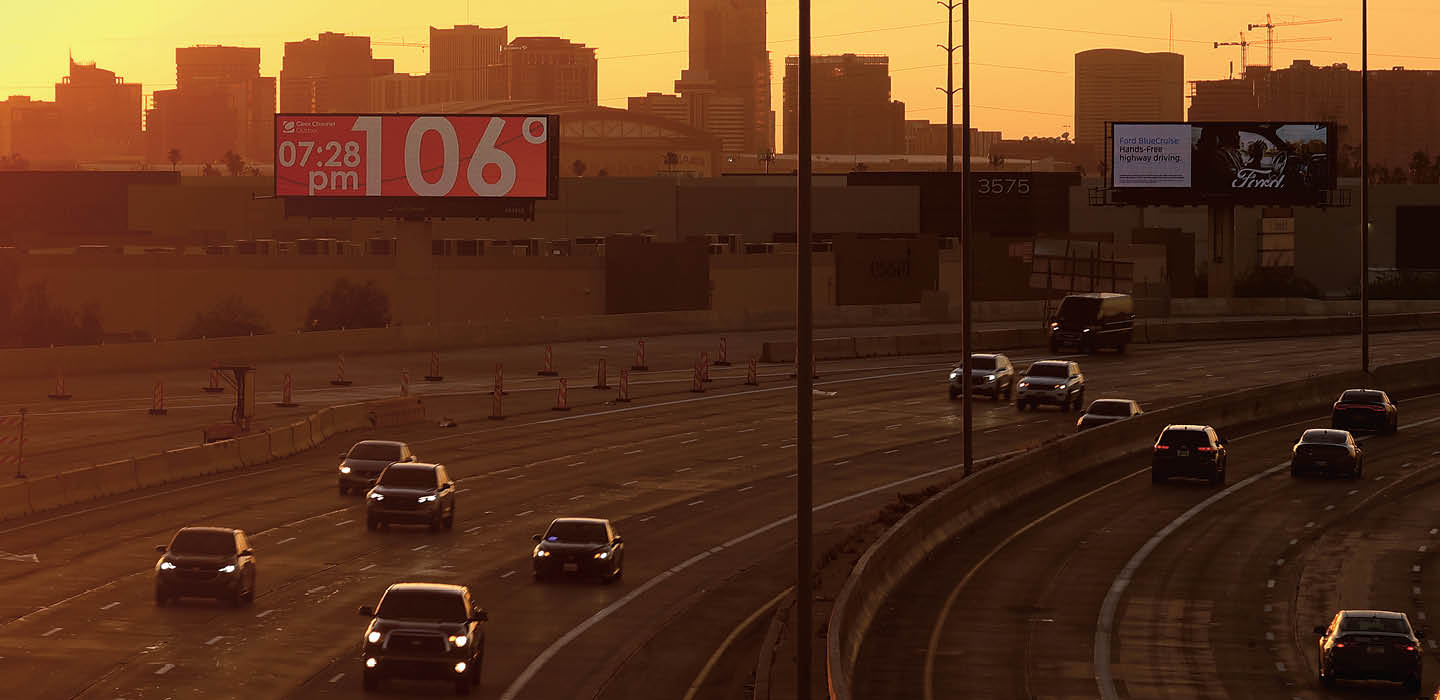

A sign shows the temperature in Phoenix, Arizona.

Justin Sullivan/Getty Images

CCSS

R.1, R.2, R.4, R.6, R.7, W.1, SL.1, L.4, L.6

Standards

Beating the Heat

Unusually high temperatures are affecting places around the globe. What’s being done to keep people cool?  

    Boiling. Sizzling. Sweltering.

    Do those words describe your last few summers? If so, you’re not alone. Unusually high temperatures have affected billions of people around the world. In fact, 2024 was the hottest year since scientists started keeping a record of the global temperature in 1850. 

    Scientists say this extreme heat is connected to climate change. Some shifts in Earth’s typical weather happen naturally over time. But human actions are speeding up the process. The resulting heat can be uncomfortable—and even dangerous. Spending too much time in extreme heat can cause health problems like dehydration.

    But in many places that are facing extreme heat, people are working on solutions. Read on to learn how three different cities are dealing with higher temperatures.

    Boiling. Sizzling. Sweltering.

    Did your last few summers feel that way? If so, you’re not alone. Unusually high temperatures have affected billions of people around the world. In fact, 2024 was the hottest year since 1850. That’s when scientists started keeping a record of the global temperature.

    Experts say this extreme heat is connected to climate change. Some shifts in Earth’s weather happen naturally over time. But human actions are speeding up the process. The resulting heat can be uncomfortable. It can be dangerous too. Extreme heat can cause health problems like dehydration.

    But people are working on solutions. Read on to learn how three different cities are dealing with higher temperatures.

    Boiling. Sizzling. Sweltering.

    If those words describe your last few summers, you’re not alone. Unusually high temperatures have affected billions of people around the world. In fact, 2024 was the hottest year since scientists started keeping a record of the global temperature in 1850.

    Scientists say this extreme heat is connected to climate change. While some shifts in Earth’s typical weather happen naturally over time, human actions are speeding up the process. The resulting heat can be uncomfortable—and even dangerous. Spending too much time in extreme heat can cause health problems like dehydration.

    But in many places that are facing extreme heat, people are working on solutions. Read on to learn how three different cities are dealing with higher temperatures.

Hot Spot: Phoenix, Arizona

Top 2024 Temp: 118°F
Cool Tool: Artful Shade

Jim McMahon/Mapman ®

    Heat has always been a part of life in Phoenix. But it’s getting worse. In 2024, the city set a record. There were 70 days at or above 110°F. The hot sun makes the city’s public parks hard to use. Keili Lopez Pastor, 17, lives across from one of them. “For the past couple of years, it’s been too hot to go outside,” she says.

    Phoenix has always been hot. But it’s getting worse. In 2024, the city set a record. It had 70 days at or above 110°F. The hot sun makes the city’s public parks hard to use. Keili Lopez Pastor, 17, lives near one of them. “For the past couple of years, it’s been too hot to go outside,” she says.

    Heat has always been a part of life in Phoenix—but it’s getting worse. In 2024, the city set a record with 70 days at or above 110°F. The hot sun makes the city’s public parks hard to use. Keili Lopez Pastor lives across from one of them. “For the past couple of years, it’s been too hot to go outside,” the 17-year-old says.

City of Phoenix

Students helped create this shady public art.

    This summer, the city tested a solution. Nine parks across the city added colorful works of art. Those works of art also offered shade. At one park, people relaxed under a fabric tunnel made from old quilts. At another, a giant tortoise sculpture blocked out the sun. These shaded areas were up to 25°F cooler than areas outside of them.

    Keili herself took part in the project. She and other students from her school helped paint a shaded structure at her local park. The structure also misted water to keep people cool. 

    All of the art was due to come down last month. But city officials hope to build more permanent structures at the parks in the future.

    This summer, Phoenix tested a solution. The city added art to nine parks. The art offered shade. One park got a tunnel made from old quilts. People relaxed under it. Another park got a giant tortoise sculpture. It blocked out the sun. These shaded areas were up to 25°F cooler than areas outside of them.

    Keili took part in the project. She helped paint one of the structures. Other students from her school helped too. The structure sprayed water. This kept people cool.

    The art was due to come down last month. But city officials want to build permanent structures at the parks in the future.

    This summer, the city tested a solution. Nine parks across the city added colorful works of art that also offered shade. At one park, people relaxed under a fabric tunnel made from old quilts. At another, a giant tortoise sculpture blocked out the sun. These shaded areas were up to 25°F cooler than areas outside of them.

    Keili herself took part in the project. She and other students from her school helped paint a shaded structure at her local park. The structure also misted water to keep people cool.

    All of the art was due to come down last month, but city officials hope to build more permanent structures at the parks in the future.

José L. Muñoz 

Keili Lopez Pastor took part in the project.

Hot Spot: Medellín, Colombia

Top 2024 Temp: 97°F
Cool Tool: Green Streets

Jim McMahon/Mapman ®

    Medellín is a large city high up in the mountains. The weather there used to be in the mid-70s all year long. But starting in the early 2010s, Medellín began having higher temperatures. Some experts blamed how quickly the city was being built up. Roads and buildings were replacing trees and parks. These paved areas and structures soak up heat, warming the air around them.

    Medellín is a large city. It’s high up in the mountains. The weather there used to be in the mid-70s all year long. But that changed in the early 2010s. Medellín began having higher temperatures. Some experts blamed how quickly the city was being built up. Roads and buildings replaced trees and parks. These paved areas and structures soak up heat. They warm the air around them.

    Medellín is a large city high up in the mountains. The weather there used to be in the mid-70s all year long—but starting in the early 2010s, Medellín began having higher temperatures. Some experts blamed how rapidly the city was being built up. Roads and buildings were replacing trees and parks—and these paved areas and structures soak up heat, warming the air around them.

JOAQUIN SARMIENTO/AFP via Getty Images

Gardens line paved areas like roads and sidewalks.

Daniel Romero/VWPics/Redux

Plants grow on the sides of buildings.

    In 2016, Medellín’s leaders took action. They started planting trees and other vegetation along roads, sidewalks, and riverbanks. The idea was to connect parks across the city by growing plants along the paved areas in between.

    Today the project is thought to be a success. There are 30 of these leafy shaded routes across Medellín. The city still has some hot days. But its average temperature has dropped by more than 3°F since the project began.

    In 2016, Medellín’s leaders took action. They planted trees and other vegetation along roads, sidewalks, and riverbanks. These areas connect parks across the city.

    Today the project is seen as a success. There are 30 of these leafy shaded routes. The city still has some hot days. But its average temperature has dropped by more than 3°F since the project began.

    In 2016, Medellín’s leaders took action. They started planting trees and other vegetation along roads, sidewalks, and riverbanks. The idea was to connect parks across the city by growing plants along the paved areas in between.

    Today the project is thought to be a success, with 30 of these leafy shaded routes across Medellín. The city still has some hot days, but its average temperature has decreased by more than 3°F since the project began.

Hot Spot: Tokyo, Japan

Top 2024 Temp: 99°F
Cool Tool: Chill Clothes

Jim McMahon/Mapman ®

    Would you ever wear an air-conditioned outfit? In Tokyo, Japan, some people already do. The garments have small battery-powered fans. Those fans draw air inside the fabric to keep people cool.

    This cool clothing has actually been around for more than 20 years. It was first designed as a way to keep outdoor workers safe in heat waves. Now Japanese fashion designers are putting fans in jackets, shirts, and vests too. 

    The garments can be expensive and hard to find outside of Asia. But they might tell us something about fashion’s future. Will we all be dressed to chill someday? 

    Would you wear an air-conditioned outfit? In Tokyo, Japan, some people do. The garments have small battery-powered fans. The fans draw air inside the fabric. This keeps people cool.

    This cool clothing was invented more than 20 years ago. It was created to keep outdoor workers safe in heat waves. Now Japanese fashion designers are putting fans in jackets, shirts, and vests too.

    The garments can be expensive. They can be hard to find outside of Asia. But maybe they are fashion’s future. Will we all be dressed to chill someday? 

    Would you ever wear an air-conditioned outfit? In Tokyo, Japan, some people already do. The garments have small battery-powered fans, which draw air inside the fabric to keep people cool.

    This cool clothing has actually been around for more than 20 years. It was first designed as a way to keep outdoor workers safe during heat waves, but now Japanese fashion designers are putting fans in jackets, shirts, and vests too.

    The garments can be expensive and hard to find outside of Asia, but they might tell us something about fashion’s future. Will we all be dressed to chill someday? 

YOSHIKAZU TSUNO/AFP via Getty Images

A built-in fan provides constant cooling!


ACTIVITY: 
5 Questions About
Extreme Heat

What to do: Answer the questions below. Use full sentences. Write them on a separate sheet of paper.

What to do: Answer the questions below. Use full sentences. Write them on a separate sheet of paper.

What to do: Answer the questions below. Use full sentences. Write them on a separate sheet of paper.

Where is clothing that contains fans usually found?

Where is clothing that contains fans usually found?

Where is clothing that contains fans usually found?

When was this type of clothing first invented?

When was this type of clothing first invented?

When was this type of clothing first invented?

Why was a tunnel made of old quilts placed in a park in Phoenix, Arizona?

Why was a tunnel made of old quilts placed in a park in Phoenix, Arizona?

Why was a tunnel made of old quilts placed in a park in Phoenix, Arizona?

How were shady paths created between parks in Medellín, Colombia?

How were shady paths created between parks in Medellín, Colombia?

How were shady paths created between parks in Medellín, Colombia?

What big problem do all of these ideas help solve?  

What big problem do all of these ideas help solve?  

What big problem do all of these ideas help solve?  

videos (2)
videos (2)
Skills Sheets (7)
Skills Sheets (7)
Skills Sheets (7)
Skills Sheets (7)
Skills Sheets (7)
Skills Sheets (7)
Skills Sheets (7)
Lesson Plan (1)
Leveled Articles (2)
Text-to-Speech