


Art by Randy Pollak

Standards

Riding to Survive

In the 1930s, 250,000 kids hopped on trains to try to make it on their own. This is their incredible true story. 

Before You Read: Check out our Background Builder slideshow


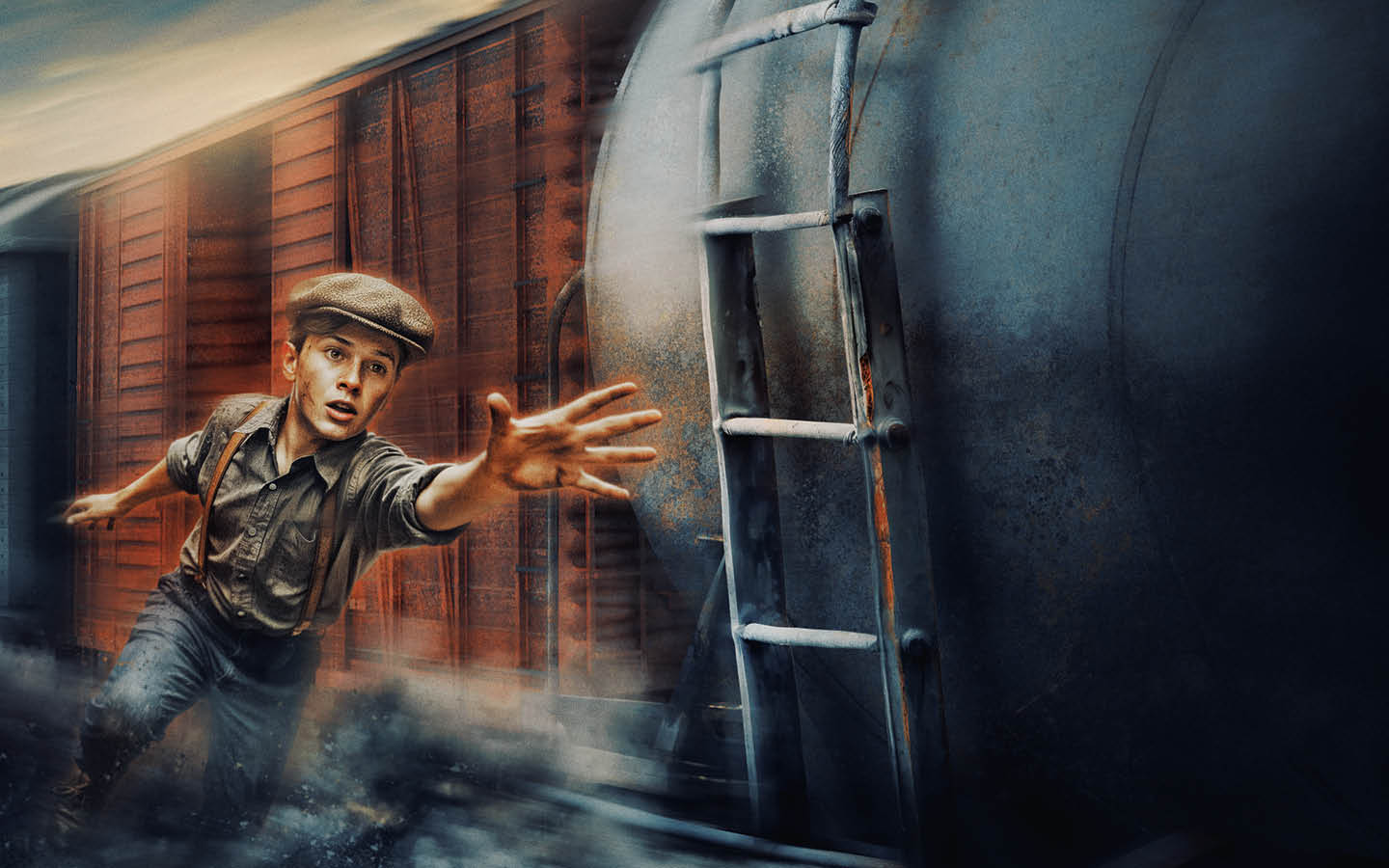
    It was the summer of 1934. Robert Symmonds, 13, was chasing a giant freight train. He wanted to hop on. Luckily, the train was moving slowly. Robert reached out for the ladder on a tank car. Gripping tightly, he pulled himself up.

    Attached to the side of the car was a narrow piece of wood. Robert sat down on it. There wasn’t much to hang on to—only a small metal bar. At least he was safe. 

    But he wasn’t for long.

    The train picked up speed. As it did, the wood board bounced up and down. Robert struggled to hang on. Terrified, he wished that he’d never hopped on the train. If he lost his grip, he would fall on the tracks and get crushed. 

    Dear God, please don’t let me fall, he prayed. 

    Finally, the train began slowing down. The bouncing stopped. Robert had somehow held on until the next stop. By then, he was so tired he could barely walk. 

    But that didn’t stop him from sneaking into a boxcar a few cars back. 

    There was no way he was getting off now.

    It was the summer of 1934. Robert Symmonds was 13. He was chasing a giant freight train. He wanted to hop on. The train was moving slowly. Robert grabbed the ladder on a tank car. He pulled himself up.        

    Attached to the side of the car was a narrow wooden board. Robert sat down on it. There wasn’t much to hang on to—just a small metal bar. At least he was safe.

    But he wasn’t for long.

    The train sped up. The board bounced up and down. It was hard to hang on. Robert was scared. He wished he’d never hopped on the train. If he lost his grip, he would fall on the tracks and get crushed.

    Dear God, please don’t let me fall, he prayed.

    Finally, the train slowed down. The bouncing stopped. Robert had held on until the next stop. He was so tired he could barely walk.

    But he still sneaked into a boxcar a few cars back.

    There was no way he was getting off now.

    It was the summer of 1934. Robert Symmonds, 13, was chasing an enormous freight train. He wanted to hop on. Fortunately, the train was moving slowly. Robert reached out, grabbed the ladder on a tank car, and pulled himself up.

    Attached to the side of the car was a narrow piece of wood. Robert sat down on it. There wasn’t much to hang on to—only a small metal bar. At least he was safe.

    But he wasn’t for long.

    The train picked up speed—and as it did, the wooden board bounced up and down. Robert struggled to hang on, terrified and wishing that he’d never hopped on the train. If he lost his grip, he would fall on the tracks and get crushed.

    Dear God, please don’t let me fall, he prayed.

    Finally, the train began slowing down, and the bouncing stopped. Robert had somehow managed to hold on until the next stop. By then, he was so exhausted that he could barely walk.

    But that didn’t prevent him from sneaking into a boxcar a few cars back.

    There was no way he was getting off now.

Lost Everything

    In the 1930s, more than 250,000 young Americans rode freight trains across the nation. They were called “boxcar children.” Some simply wanted an adventure—like Robert that day in 1934. But most were from poor families. They rode from town to town looking for work. 

    Life riding the rails was treacherous. So why did so many people do it? The 1930s were a period known as the Great Depression. It was a really hard time in the U.S. Factories shut down. Farmers couldn’t sell their crops. Banks failed. Many families lost their life savings. By 1932, one in four American workers were jobless. 

    Robert first rode the rails just for fun. But in 1938, his life changed forever. Robert’s dad had been a business owner. The family lived in a nice house in Seattle, Washington. There was always food on the table. 

    Then—like so many others—Robert’s father lost everything. 

    As the only son, Robert, then 16, decided it was up to him to save his family. He once again set out to live life on the rails.

    But this time was different. Robert planned to ride south and find a job.

    In the 1930s, more than 250,000 young Americans rode freight trains across the nation. They were called “boxcar children.” Some did it for fun. But most were from poor families. They rode from town to town looking for work.

    Life riding the rails was treacherous. So why did so many people do it? The 1930s were a period known as the Great Depression. It was a really hard time in the U.S. Factories shut down. Farmers couldn’t sell their crops. Banks failed. Many families lost their life savings. By 1932, one in four American workers were jobless.

    Robert first rode the rails just for fun. But in 1938, his life changed. His dad had been a business owner. The family lived in a nice house in Seattle, Washington. There was always food on the table.

    Then—like so many others—Robert’s dad lost everything.

    Robert was 16. He was the only son. He decided it was up to him to save his family. He once again set out to live life on the rails.

    But this time was different. Robert planned to ride south and find a job.

    In the 1930s, more than 250,000 young Americans rode freight trains across the nation. They were called “boxcar children.” Some were simply looking for adventure, like Robert on that day in 1934, but most were from poor families and were riding from town to town looking for work.

    Life riding the rails was treacherous—so why did so many people do it? The 1930s were a period known as the Great Depression. It was a really difficult time in the U.S. Factories shut down, farmers couldn’t sell their crops, banks failed, and many families lost their life savings. By 1932, one in four American workers were unemployed.

    Robert initially rode the rails just for fun—but in 1938, his life changed forever. Robert’s dad had been a business owner, and the family lived in a comfortable house in Seattle, Washington. There was always food on the table.

    Then—like so many others—Robert’s father lost everything.

    As the only son, Robert, then 16, decided that saving his family was his responsibility. He once again set out to live life on the rails.

But this time was different. Robert planned to ride south in search of employment.    

Art by Randy Pollak; Chronicle/Alamy Stock Photo (Train); AP Images (Boxcar Kid)

Boxcar Life
Riding the rails was not a pleasant life. Bad falls caused broken bones—or worse. Many riders also faced hunger and serious illness.

A Dangerous Adventure

    By the 1930s, the boxcar kids had become a national phenomenon. Newspapers and magazines wrote about them. There was even a movie made on the subject. Teens across America found these tales thrilling. Many ran away to hop trains. Even those who had plenty to eat at home were becoming boxcar kids.

    Riding the rails was not carefree, however. In fact, danger was everywhere. The rail yards were patrolled by “bulls”—guards paid by the railroad companies. These men would often beat teens they caught before taking them to jail. 

    But the greatest danger was the train itself. Each train was made of thousands of tons of metal, speeding along the tracks. From 1929 to 1939, nearly 25,000 train hoppers died. 

    Those who survived the train rides often faced hunger and illness. They would wander into towns, begging for food or jobs. Some people offered them a hot meal or a safe place to sleep. But most had too many of their own problems to help. “Go home to your parents,” people would say. 

    After all, if an adult couldn’t get work, why should a kid?

    By the 1930s, the boxcar kids were a national phenomenon. Newspapers and magazines wrote about them. There was even a movie made on the subject. Teens found these tales thrilling. Many ran away to hop trains. Even those who had plenty to eat at home wanted to be boxcar kids.

    Riding the rails was not carefree, however. Danger was everywhere. The rail yards were patrolled by “bulls.” These were guards paid by the railroad companies. They often beat teens they caught before taking them to jail.

    But the worst danger was the train itself. Each train was made of thousands of tons of metal, speeding along the tracks. From 1929 to 1939, nearly 25,000 train hoppers died.

    Those who survived the train rides often faced hunger and illness. They would wander into towns, begging for food or jobs. Some people gave them a hot meal or a safe place to sleep. But most people couldn't help. They had too many problems of their own.

    “Go home to your parents,” people said.

    After all, if an adult couldn’t get work, why should a kid?

    By the 1930s, the boxcar kids had become a national phenomenon. Articles about them appeared in newspapers and magazines, and there was even a movie made on the subject. Teenagers across America found these tales thrilling, and many ran away to hop trains. Even those who had plenty to eat at home were becoming boxcar kids.

    Riding the rails was far from carefree, however. In fact, danger was everywhere. The rail yards were patrolled by “bulls”—guards paid by the railroad companies. These men would often beat teens they caught before taking them to jail.

    But the greatest danger was the train itself. Each train was made of thousands of tons of metal, speeding along the tracks. From 1929 to 1939, nearly 25,000 train hoppers died.

    Those who survived the train rides often faced other perils, such as hunger and illness. They would wander into towns, begging for food or jobs. Some people offered them a hot meal or a safe place to sleep, but most had too many of their own problems to help. “Go home to your parents,” people would say.

    After all, if an adult couldn’t find employment, why should a kid?


Build Knowledge

The Great Depression

The Great Depression began in 1929 and lasted until the late 1930s. During this time, life was difficult for many Americans.

Science History Images/Alamy Stock Photo

People waited in lines that stretched for city blocks just for a small, free meal.

People waited in lines that stretched for city blocks just for a small, free meal.

People waited in lines that stretched for city blocks just for a small, free meal.

© Minnesota Historical Society/CORBIS/Corbis via Getty Images

Millions of Americans were out of work and couldn’t get jobs.

Millions of Americans were out of work and couldn’t get jobs.

Millions of Americans were out of work and couldn’t get jobs.

Smith Archive/Alamy Stock Photo

People lost their homes, and shanty towns sprang up across the country. These temporary neighborhoods had shelters made of cardboard, scrap metal, and tarps.

People lost their homes, and shanty towns sprang up across the country. These temporary neighborhoods had shelters made of cardboard, scrap metal, and tarps.

People lost their homes, and shanty towns sprang up across the country. These temporary neighborhoods had shelters made of cardboard, scrap metal, and tarps.

Glimmer of Hope

    Robert eventually found farming work. He would hop trains up and down the West Coast, going from farm to farm. It was grueling work. He saved as much money as he could and sent it home. 

    Then, in 1939, Robert joined the Civilian Conservation Corps (CCC). It was created in 1933 by President Franklin Delano Roosevelt. The CCC hired unemployed, unmarried men between the ages of 18 and 25. 

    These men were housed, fed, and paid $30 a month to work in national parks and forests. Twenty-five of those dollars had to be sent home to their families. In those days, that was enough for a small family to live on.

    The CCC was a success. From 1933 to 1942, it hired 2.5 million men. They planted trees, fought wildfires, and built dams across America. 

    After a while, Robert found farming work. He would hop trains up and down the West Coast, going from farm to farm. It was grueling work. He saved as much money as he could and sent it home.

    Then, in 1939, Robert joined the Civilian Conservation Corps (CCC). It was created in 1933 by President Franklin Delano Roosevelt. The CCC hired unemployed, unmarried men between the ages of 18 and 25.

    These men were housed, fed, and paid $30 a month to work in national parks and forests. Twenty-five of those dollars had to be sent home to their families. In those days, that was enough for a small family to live on.

    The CCC was a success. From 1933 to 1942, it hired 2.5 million men. They planted trees, fought wildfires, and built dams.

    Robert eventually found farming work. He would hop trains up and down the West Coast, going from farm to farm. It was grueling work. He saved as much money as he could and sent it home.

    Then, in 1939, Robert joined the Civilian Conservation Corps (CCC), which was created in 1933 by President Franklin Delano Roosevelt. The CCC hired unemployed, unmarried men between the ages of 18 and 25.

    These men were housed, fed, and paid $30 a month to work in national parks and forests. Twenty-five of those dollars had to be sent home to their families. In those days, that was enough for a small family to live on.

    The CCC was a success. From 1933 to 1942, it hired 2.5 million men, who planted trees, fought wildfires, and built dams across America.

Art by Randy Pollak; AP Images (All Images)

Into the Woods
Robert Symmonds joined the Civilian Conservation Corps. This program paid young men to help improve the country’s public lands. It had more than 1,000 camps across the country.

A New Era

    By the 1940s, the country was starting to bounce back from the Great Depression. World War II was being fought overseas. Once the U.S. entered the war, many kids left the rails and the CCC camps to serve in the military. Robert was one of them. After the war ended, Robert got married and raised four children in California.

    Boxcar kids like Robert left home as teens. Almost overnight, they became adults. Riding the rails showed them just how cruel the world could be. But it also taught them to be independent and deeply compassionate.

    And that made them incredibly proud. 

    By the 1940s, the country was starting to bounce back from the Great Depression. World War II was being fought overseas. Once the U.S. entered the war, many kids left the rails and the CCC camps to serve in the military. Robert was one of them. After the war ended, he got married and raised four children in California.

    Boxcar kids like Robert left home as teens. They quickly became adults. Riding the rails showed them how cruel the world could be. But it also taught them to be independent and deeply compassionate.

    And that made them very proud. 

    By the 1940s, the country was starting to recover from the Great Depression, and World War II was being fought overseas. Once the U.S. entered the war, many kids—including Robert—left the rails and the CCC camps to serve in the military. After the war ended, Robert got married and raised four children in California.

    Boxcar kids like Robert left home as teens—and practically overnight, they became adults. Riding the rails showed them just how cruel the world could be, but it also taught them to be independent and deeply compassionate.

    And that made them incredibly proud. 

Background Builder

videos (1)
Skills Sheets (9)
Skills Sheets (9)
Skills Sheets (9)
Skills Sheets (9)
Skills Sheets (9)
Skills Sheets (9)
Skills Sheets (9)
Skills Sheets (9)
Skills Sheets (9)
Lesson Plan (1)
Leveled Articles (2)
Text-to-Speech