

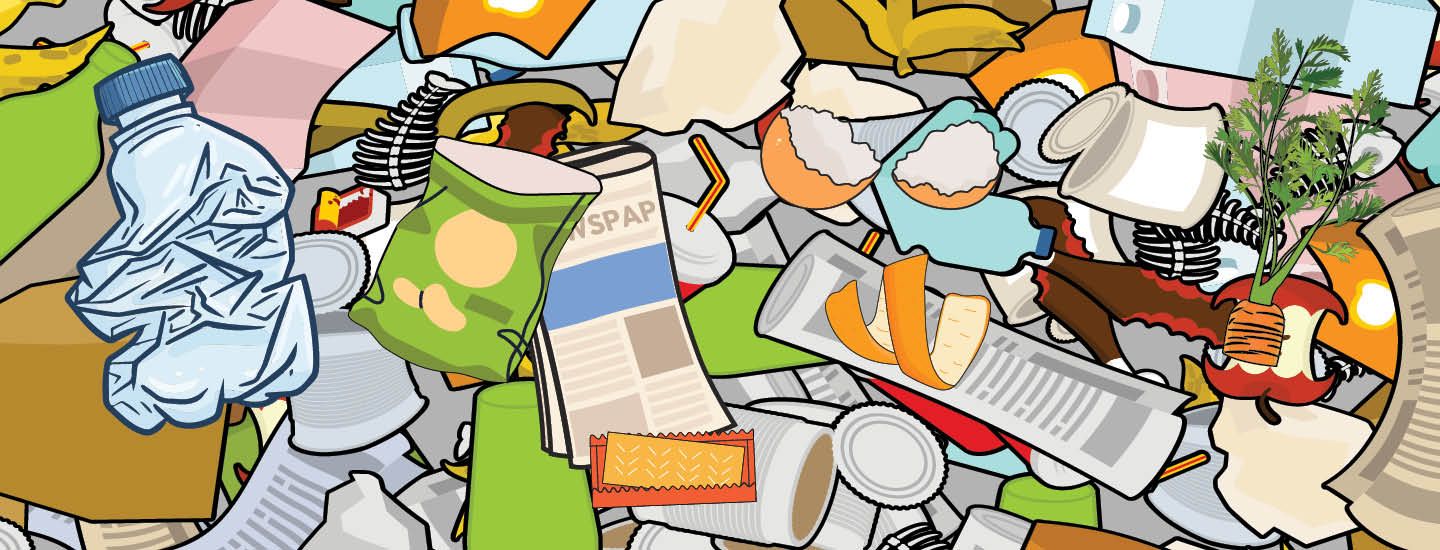

The average person in the United States throws out about 5 pounds of trash every day.
That might not sound like much. But multiply that by everyone in your family. Then multiply it by everyone in your school or in your town. Suddenly, all that trash adds up.
Why is that a problem? A lot of garbage goes to landfills—big open piles of waste. This waste releases harmful chemicals into the air and water. Trash can also blow away, ending up in forests, rivers, and oceans. This hurts the plants and animals that live there. (Plastic is an especially big problem. It can take hundreds of years to decompose.)
So what can we do? Some people are already trying to produce less garbage. They call it the zero-waste movement. But it’s not actually about creating zero waste, says Anne-Marie Bonneau. She’s a writer and cookbook author who has been finding ways to reduce her waste since 2011. “If you try to go zero waste right away, you’ll get overwhelmed,” she says. “Your habit won’t last.”
Small changes can add up though—just like all that trash. So we asked three teens to track how much stuff they tossed in a day. Then they used that info to come up with a goal to create less waste. Here’s what happened when they put their plans into action.
Five pounds. That’s how much trash the average person in the United States throws out every day.
Multiply that by everyone in your family. Multiply it by everyone in your school or your town. That’s a lot of trash!
And it’s a problem. Why? A lot of garbage goes to landfills. A landfill is a big open pile of waste. The waste releases harmful chemicals. They go into the air and water. Trash can also blow away. It can blow into forests, rivers, and oceans. This hurts plants and animals. (Plastic is a big problem. It can take hundreds of years to decompose.)
What can we do? Some people are trying to create less trash. They call it the zero-waste movement. But it’s not really about creating zero waste, says Anne-Marie Bonneau. She’s a writer. She has been reducing her waste since 2011. “If you try to go zero waste right away, you’ll get overwhelmed,” she says. “Your habit won’t last.”
But small changes can add up. (Just like trash.) We asked three teens to track their daily trash. Then they set a goal to create less waste. Here’s what happened.
The average person in the United States throws out about 5 pounds of trash every day.
That might not sound like much, but multiply it by everyone in your family. Then multiply it by everyone in your school or in your town. Suddenly, all that trash adds up.
Why is that a problem? A lot of garbage goes to landfills—big open piles of waste. This waste releases harmful chemicals into the air and water. Trash can also blow away and land in forests, rivers, and oceans, which hurts the plants and animals that live there. (Plastic is an especially big problem, as it can take hundreds of years to decompose.)
So what can we do? Some people are already trying to produce less garbage. They call it the zero-waste movement. But it’s not actually about creating zero waste, says Anne-Marie Bonneau, a writer and cookbook author who has been finding ways to reduce her waste since 2011. “If you try to go zero waste right away, you’ll get overwhelmed,” she explains. “Your habit won’t last.”
Small changes can add up though—just like all that trash. So we asked three teens to track how much stuff they tossed in a day and then use that info to come up with a goal to create less waste. Here’s what happened when they put their plans into action.