

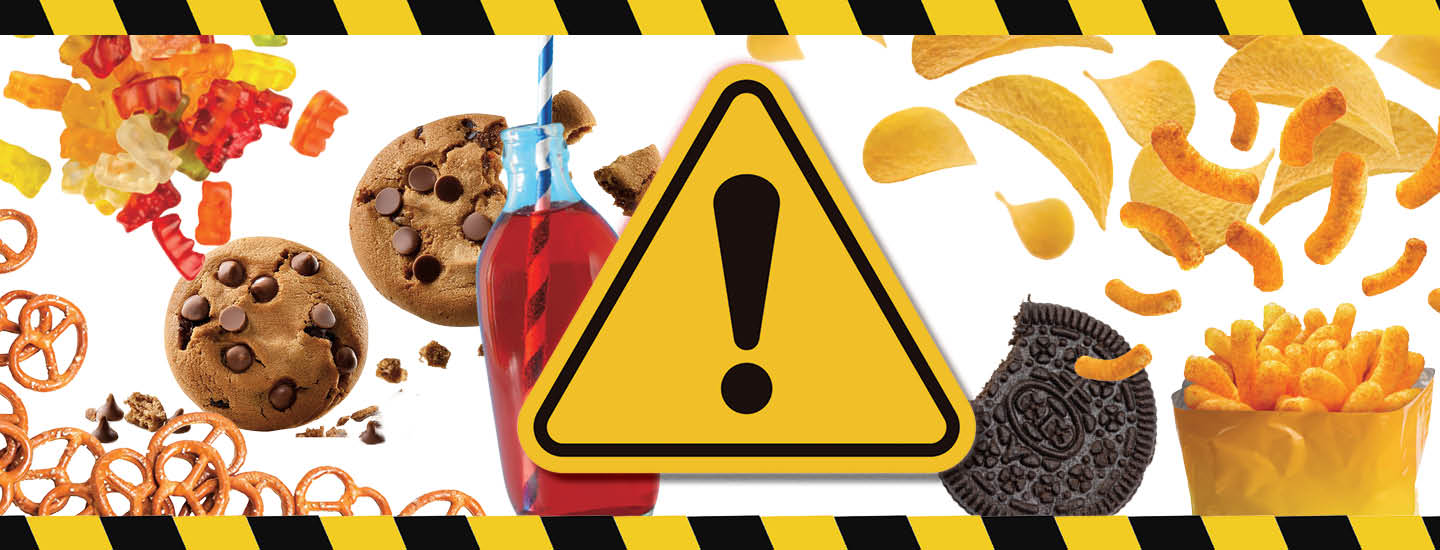

Some of your favorite snacks come with warning labels in other countries.
In Mexico, a can of Coke has a stop sign that says the drink is high in sugar.
In Israel, a bag of Cheetos warns about high levels of sodium.
In Chile, a package of Oreos points out high levels of sugar, fat, and sodium.
These warnings don’t exist in the United States. But some health experts say they should. They want the U.S. government to do something about ultra-processed foods (UPFs). Those are generally foods that contain few nutrients and a lot of artificial ingredients.
Several states are already taking action. California is working to take UPFs out of school meals. And last year, Texas passed a new law. It requires warning labels on foods with certain dyes and other additives.
But are warning labels really needed? And will they work? Read on to learn about UPFs so you can decide for yourself.
Some snacks come with warning labels in other countries.
In Mexico, a can of Coke warns about sugar. In Israel, a Cheetos label warns about sodium. In Chile, an Oreos label warns about sugar, fat, and sodium.
Snacks in the United States do not have warnings. Some health experts say they should. They want the U.S. government to do something about ultra-processed foods (UPFs). These foods have few nutrients. They have many artificial ingredients.
Some states are taking action. California is taking UPFs out of school meals. Texas passed a new law. It says foods with certain dyes and other additives must have labels.
But do we really need warning labels? And will they work? Read on to decide.
Some of your favorite snacks come with warning labels in other countries.
In Mexico, a can of Coke has a stop sign that says the drink is high in sugar.
In Israel, a bag of Cheetos warns about high levels of sodium.
In Chile, a package of Oreos points out high levels of sugar, fat, and sodium.
These warnings don’t exist in the United States, but some health experts say they should. They want the U.S. government to do something about ultra-processed foods (UPFs). Those are generally foods that contain few nutrients and a lot of artificial ingredients.
Several states are already taking action. California is working to take UPFs out of school meals. And last year, Texas passed a new law that requires warning labels on foods with certain dyes and other additives.
But are warning labels really necessary? And will they work? Read on to learn about UPFs so you can decide f